
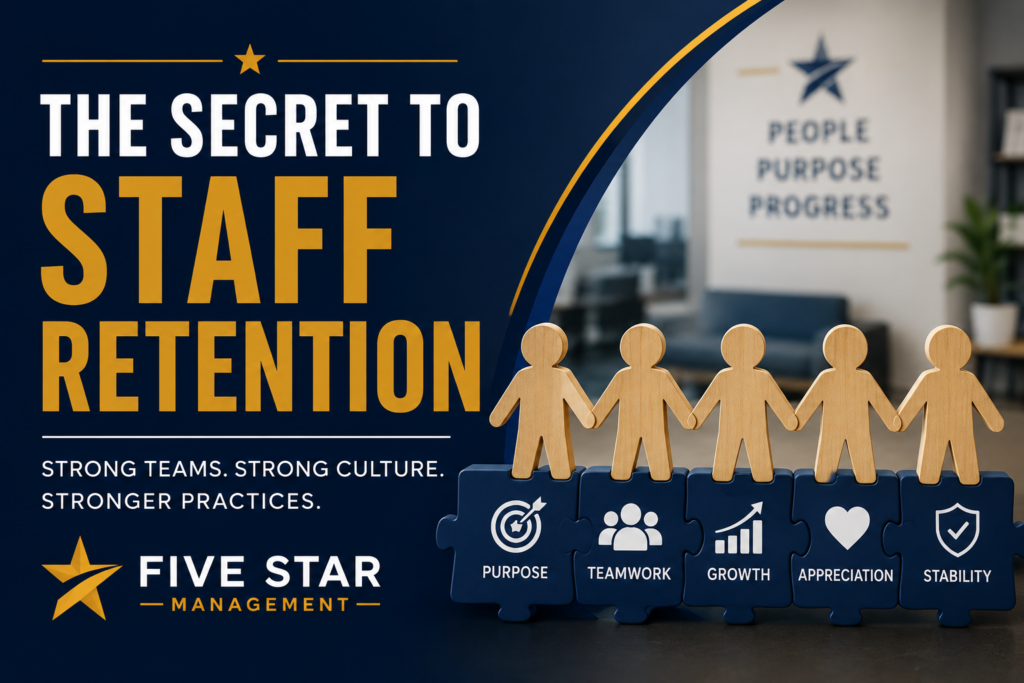

Finding great team members is hard.
Losing them is expensive.
When a strong chiropractic assistant, office manager, or team leader leaves your practice, you don’t just lose an employee. You lose experience, relationships, momentum, and institutional knowledge.
Then the process starts all over again.
Recruit.
Interview.
Hire.
Train.
Wait for the new person to get up to speed.
That’s why staff retention is one of the most important—and often overlooked—parts of building a successful chiropractic practice.
But here’s the mistake many practice owners make:
They assume people stay because of money.
Compensation matters. But long-term retention is about much more than a paycheck.
Great people tend to stay where they feel valued, understand what’s expected of them, see opportunities to grow, and believe they’re part of something meaningful.
That’s the real secret to staff retention.

Why Good Chiropractic Team Members Leave
Staff turnover can feel unpredictable.
One day, everything seems fine.
Then a valuable employee gives notice.
But turnover often begins long before someone decides to leave.
Frustration builds when:
- Expectations are unclear
- Communication is inconsistent
- Good work goes unnoticed
- Problems aren’t addressed
- Employees don’t see opportunities to grow
- Leadership constantly changes direction
- The workplace feels chaotic
- Team members don’t understand the larger mission
Eventually, another opportunity begins to look more attractive.
Owners sometimes respond by assuming they hired the wrong person.
Sometimes that’s true.
But when turnover becomes a pattern, it’s worth looking beyond the employees and examining the environment they’re working in.
Retention starts with leadership.
1. Give People Clarity
One of the simplest ways to improve staff retention is to create clarity.
Every team member should understand:
- What their role is
- What they’re responsible for
- What great performance looks like
- How their performance is measured
- Who they report to
- How their role contributes to the practice
Ambiguity creates stress.
Clarity creates confidence.
When employees constantly have to guess what the owner wants, they’re more likely to become frustrated.
This is why documented systems and clearly defined responsibilities matter so much.
As we discuss in Chiropractic Onboarding Systems: How to Set New Team Members Up for Long-Term Success, retention doesn’t begin after someone has been with you for a year.
It begins on their first day.
A strong onboarding experience communicates:
We have a plan for you here.
That message matters.
2. Build a Culture People Want to Be Part Of
Every chiropractic practice has a culture.
The question is whether you’ve created it intentionally.
Culture isn’t the mission statement hanging in the break room.
It’s what employees experience every day.
It’s how leaders respond when something goes wrong.
It’s whether team members support each other.
It’s how wins are celebrated.
It’s whether problems are addressed directly or ignored.
It’s whether employees feel comfortable asking questions.
And it’s whether the practice’s stated values actually match its behavior.
Strong cultures create belonging.
When people genuinely enjoy the team they’re part of and believe in what they’re building together, leaving becomes a much harder decision.
Want to go deeper? Listen to our podcast episode, How to Build a Strong Chiropractic Practice Culture That Keeps Great Team Members, where we break down how chiropractic practice owners can intentionally create a culture that attracts, develops, and retains great people.
3. Help Employees Understand the Mission
People want their work to matter.
This is especially powerful in chiropractic.
Your front desk team isn’t simply answering phones.
They’re helping someone take the first step toward getting care.
Your chiropractic assistants aren’t simply moving patients through the office.
They’re helping create an exceptional patient experience.
Your office manager isn’t simply managing schedules.
They’re helping the entire organization function at a higher level.
When employees only understand their tasks, work can become repetitive.
When they understand the mission behind those tasks, their work has meaning.
Remind your team regularly:
Why does this practice exist?
Who are we trying to help?
What impact are we trying to create in our community?
A strong mission gives everyday work a bigger purpose.
4. Recognize Great Performance
Imagine working hard every day and only hearing from your boss when something goes wrong.
Eventually, that gets exhausting.
Recognition doesn’t have to mean elaborate rewards.
Often, simple acknowledgment is enough.
Tell someone when they handled a difficult patient well.
Celebrate when the team reaches a goal.
Recognize improvements.
Thank people for taking ownership.
Highlight employees who demonstrate your practice values.
Great leaders don’t only inspect mistakes.
They notice progress.
When people know their contribution is seen and appreciated, they’re more likely to remain invested in the organization.

5. Create Opportunities for Growth
One of the biggest retention mistakes is assuming a great employee wants to perform the exact same role forever.
Your best people usually want to grow.
That might mean:
- Learning new skills
- Taking on additional responsibility
- Leading meetings
- Training new employees
- Managing a department
- Becoming a team leader
- Participating in strategic decisions
Give people somewhere to go.
When employees can see a future inside your organization, they don’t have to leave your organization to find one.
This becomes especially important as your practice grows.
A multi-doctor or multi-location practice needs more than additional employees. It needs leaders.
Our guide on How to Build a Multi-Doctor Practice explains why developing leaders from within becomes increasingly important as a chiropractic organization expands.

6. Don’t Confuse Accountability With Micromanagement
Great employees want accountability.
They don’t want to be micromanaged.
There’s a big difference.
Accountability says:
Here’s the outcome we’re responsible for. Let’s review our progress and solve problems together.
Micromanagement says:
I don’t trust you to do this without me.
Strong leaders establish expectations, measure results, provide feedback, and then give capable people room to perform.
If every decision requires owner approval, employees eventually stop taking initiative.
They wait.
They ask.
They depend.
Then the owner becomes overwhelmed and wonders why nobody takes ownership.
Leadership should create more capable people—not more dependence.
That’s one reason Chiropractic Leadership Training for Clinic Owners is such an important part of building a practice that can grow beyond the owner.
7. Communicate Before Problems Become Resignations
Don’t wait for the annual review to find out how someone is doing.
Talk regularly.
Ask questions like:
What’s going well?
What’s frustrating you right now?
Where do you need more support?
What would you like to learn next?
Is there anything making your job harder than it needs to be?
Small conversations can uncover problems while they’re still fixable.
Without communication, leaders are forced to guess.
And silence isn’t always a sign that everything is fine.
Your strongest employees may not complain loudly. Sometimes they simply start looking elsewhere.
8. Build Systems That Reduce Daily Frustration
People don’t usually enjoy working in chaos.
If schedules are constantly changing, processes are unclear, responsibilities overlap, and every problem becomes an emergency, even great employees can burn out.
Systems protect your team from unnecessary stress.
Document:
- Daily responsibilities
- Patient workflows
- Scheduling procedures
- Communication standards
- Financial processes
- Training procedures
- Opening and closing routines
- Performance expectations
The goal isn’t bureaucracy.
It’s predictability.
In The Secret to Running a Stress-Free Chiropractic Clinic, we explain how stronger systems reduce dependence on the owner while creating a calmer, more consistent environment for the entire team.
That benefits retention, too.
9. Hire People Who Fit the Culture in the First Place
Retention starts before the hire.
You can have excellent leadership and still struggle to retain someone who was never a good fit.
Don’t hire simply because you’re desperate to fill a position.
Look for alignment around:
- Values
- Work ethic
- Communication
- Attitude
- Accountability
- Patient experience
- Teamwork
Skills can often be taught.
Alignment is much harder to manufacture.
A thoughtful hiring process may take longer upfront, but it can save months—or years—of frustration later.
10. Develop Better Leaders
Ultimately, staff retention comes back to leadership.
People experience your organization through the people leading them.
Strong leaders create:
- Clarity
- Trust
- Accountability
- Communication
- Recognition
- Development
- Stability
That’s why improving staff retention isn’t simply an HR initiative.
It’s a leadership initiative.
The better your leaders become, the stronger your organization becomes.
And as your practice grows, developing leadership at every level becomes increasingly important.
Retention Doesn’t Mean Keeping Everyone Forever
There’s one important distinction.
The goal isn’t zero turnover.
Not every employee should stay forever.
People change.
Goals change.
Practices change.
And sometimes an employee who was right for one stage of the practice isn’t right for the next.
Healthy retention means creating an environment where your best, most aligned people have compelling reasons to stay and grow with you.
That’s very different from trying to prevent anyone from ever leaving.

How Five Star Helps Chiropractors Build Stronger Teams
At Five Star Management, we help chiropractic practice owners build the leadership systems, accountability structures, and team cultures necessary for sustainable growth.
Because building a successful practice isn’t simply about attracting more patients.
You need people who can help you serve them.
Through Five Star coaching and programs like the Clinic Directors Empowerment Program (CDEP), chiropractic leaders learn how to communicate expectations, develop employees, strengthen accountability, and create teams capable of taking greater ownership.
The goal isn’t to make your team more dependent on you.
It’s to help them become stronger because of your leadership.
If you’re struggling with staff turnover, leadership challenges, or building a team that can support the next stage of your practice, schedule a complimentary strategy session with a Five Star coach.
We’ll help you identify where your team systems can improve and what your practice needs to grow.
Final Thoughts
The secret to staff retention isn’t one thing.
It’s not pizza Fridays.
It’s not a bonus.
And it’s not finding employees who will simply put up with anything.
Great chiropractic team members stay when they’re part of an organization worth staying for.
Give them clarity.
Give them purpose.
Recognize their contribution.
Help them grow.
Hold them accountable.
Build systems that make their jobs easier.
And most importantly, become the kind of leader great people want to follow.
Because when you retain great people, you don’t just reduce turnover.
You build experience.
You build culture.
You build leaders.
And you build a stronger chiropractic practice.