

Every chiropractor wants a high-performance team.
They want team members who:
- take initiative
- communicate well
- follow through
- serve patients at a high level
- contribute to practice growth
Unfortunately, many clinic owners are frustrated because their team isn’t performing at the level they expected.
The assumption is often:
“I must have hired the wrong people.”
But after working with chiropractic practices for decades, I’ve learned something important:
Most team problems are not people problems.
They’re leadership problems.
More specifically, they’re system problems.
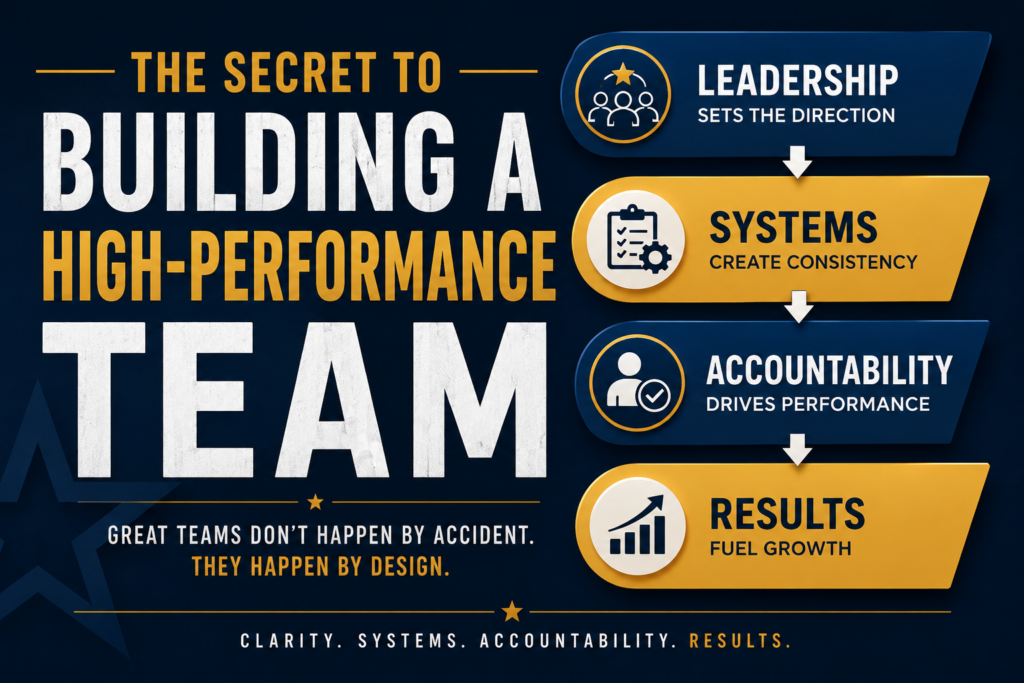
High-performance teams aren’t built by accident.
They’re built intentionally.
Why Most Teams Underperform
When a team member struggles, many owners immediately focus on the individual.
But before blaming the person, it’s worth asking a few questions:
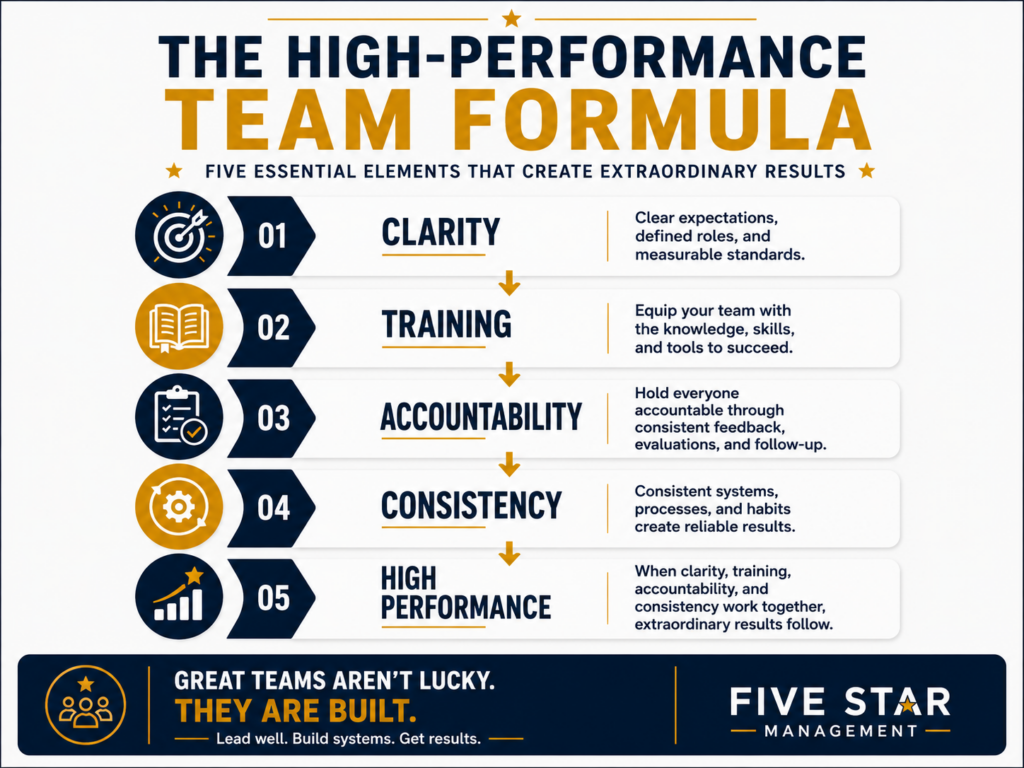
- Were expectations clearly defined?
- Was proper training provided?
- Are performance standards documented?
- Is accountability consistent?
- Are results being measured?
In many practices, the answer is no.
Employees are often expected to “figure it out.”
The problem is that unclear expectations create inconsistent performance.
People can’t consistently hit a target they can’t clearly see.
The Secret Isn’t Motivation
Many chiropractors believe they need to motivate their team.
In reality, motivation is unreliable.
Some days people feel motivated.
Some days they don’t.
High-performance teams don’t depend on motivation.
They depend on systems.
Systems create consistency.
Consistency creates confidence.
Confidence creates performance.
The best teams succeed because they know exactly:
- what to do
- how to do it
- when to do it
- how success is measured
High-Performance Teams Start With Job Books
One of the most overlooked tools in practice management is the Job Book.
A Job Book clearly defines:
- responsibilities
- procedures
- expectations
- performance standards
Without one, team members are forced to rely on memory, assumptions, and verbal instructions.
That’s a recipe for inconsistency.
With a Job Book, expectations become clear.
Clarity reduces confusion.
And clarity improves performance.
The Problem With “Common Sense”
One of the biggest mistakes leaders make is assuming team members should simply know what to do.
Unfortunately, what feels like common sense to one person may not be obvious to another.
This creates frustration on both sides.
The owner becomes irritated because expectations weren’t met.
The employee becomes frustrated because expectations were never fully explained.
The solution isn’t better employees.
The solution is better communication.
Accountability Is an Act of Leadership
Many clinic owners avoid accountability because they don’t want to create conflict.
But accountability isn’t punishment.
It’s leadership.
Without accountability:
- standards slip
- habits decline
- performance drifts
With accountability:
- expectations remain clear
- problems are identified quickly
- improvement becomes possible
The strongest teams don’t fear accountability.
They depend on it.
Inspection Creates Improvement
One of the most important principles in team development is simple:
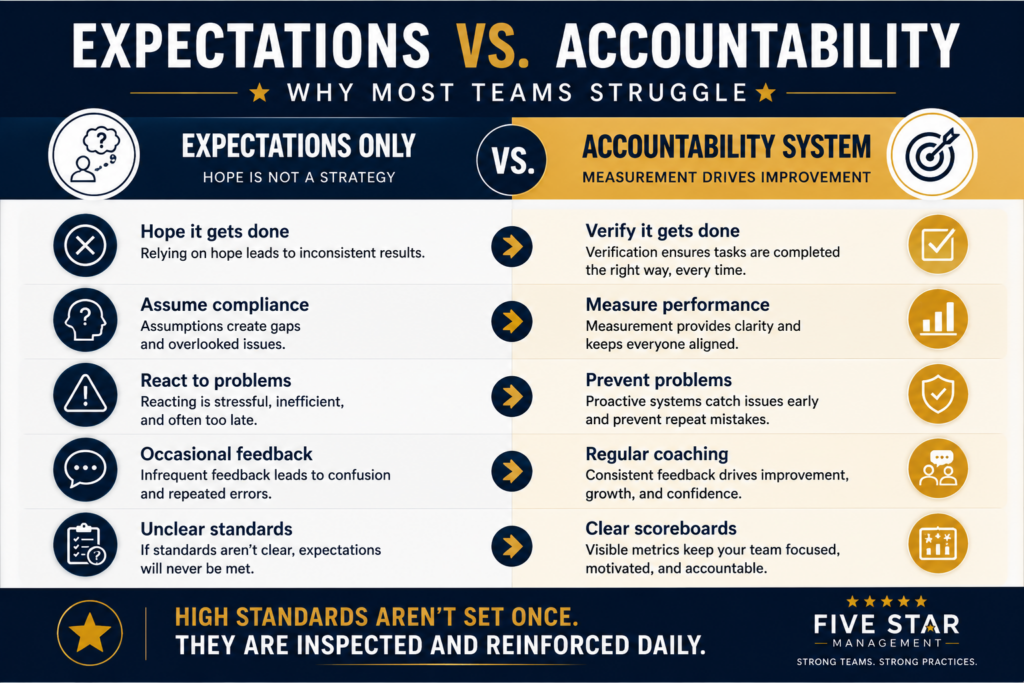
You don’t get what you expect. You get what you inspect.
Many chiropractors assume that once they explain something, it will continue happening indefinitely.
Unfortunately, that’s rarely true.
People need feedback.
They need coaching.
They need reinforcement.
This is one reason successful practices use regular audits, inspections, and evaluations to maintain high standards.
Many chiropractors struggle with accountability because they lack a structured evaluation process. This episode of The Successful Chiro Podcast: Why Most Chiropractic Team Evaluations Fail (And How to Build a High-Performance Team Instead) explores how successful practices use evaluations to improve performance, strengthen accountability, and develop stronger teams.
Why Training Should Never Stop
One of the biggest myths in business is that training is something you do once.
Great teams are constantly learning.
They’re constantly improving.
They’re constantly refining their skills.
The highest-performing practices invest heavily in:
- team meetings
- role-playing
- coaching
- leadership development
- continuing education
Because growth is not an event.
It’s a process.
Culture Is Built Through Behavior
Many chiropractic practices talk about culture.
Far fewer intentionally create it.
Culture isn’t a slogan.
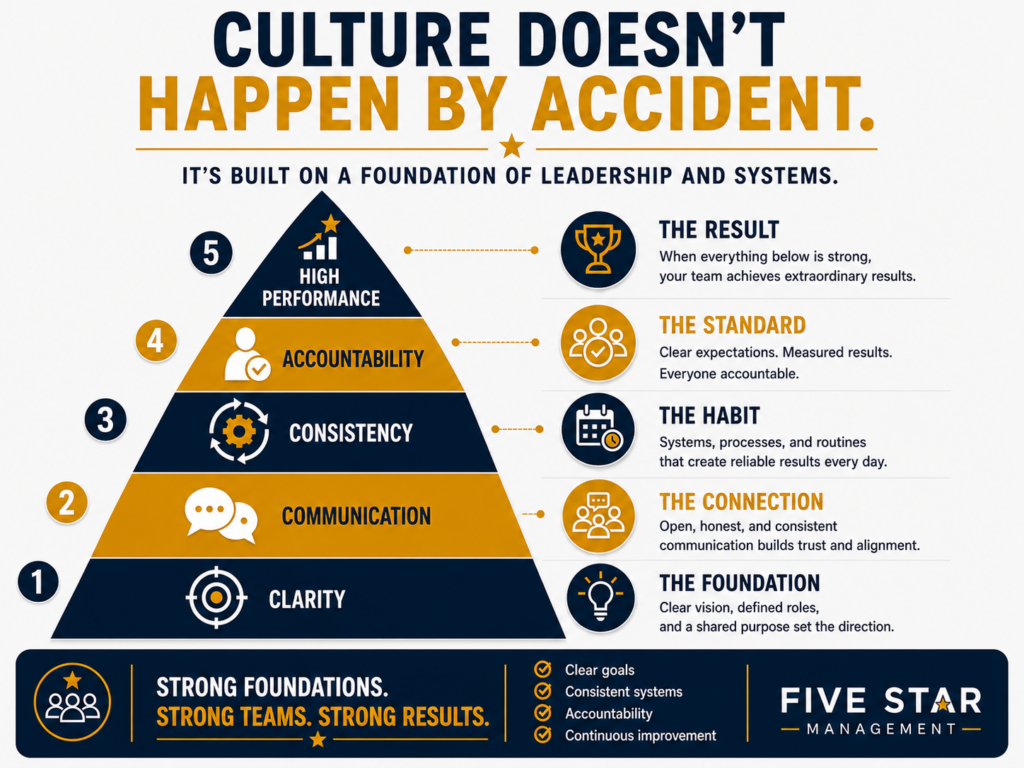
Culture is the collection of behaviors that are consistently reinforced inside the organization.
If accountability is rewarded, accountability becomes culture.
If excellence is rewarded, excellence becomes culture.
If mediocrity is tolerated, mediocrity becomes culture.
Culture follows behavior.
And behavior follows leadership.
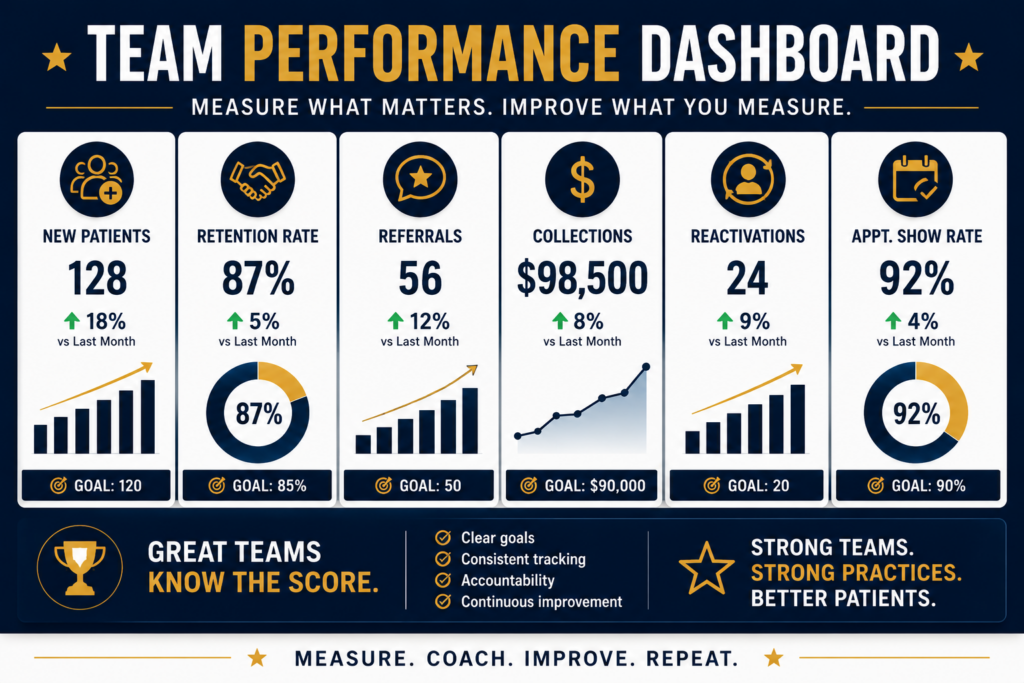
The Best Teams Have Clear Scoreboards
Imagine watching a football game without a scoreboard.
Nobody would know whether they’re winning.
The same principle applies inside a practice.
High-performance teams need scoreboards.
They need measurable outcomes.
Examples may include:
- new patient conversions
- appointment show rates
- reactivation numbers
- collections
- referrals
- retention rates
When people know the score, performance improves.
When performance improves, confidence grows.
Leadership Sets the Ceiling
Every practice eventually reaches the leadership capacity of its owner.
That’s why two clinics with similar demographics, similar services, and similar marketing can achieve dramatically different results.
The difference is leadership.
Strong leaders create:
- clarity
- consistency
- accountability
- growth
Weak leadership creates confusion.
And confusion creates underperformance.
If you want a stronger team, start by strengthening leadership.
The Connection Between Teams and Practice Growth
Many chiropractors focus heavily on marketing.
Marketing matters.
But marketing alone won’t create a great practice.
Growth requires systems.
Growth requires leadership.
Growth requires people.
The strongest practices understand that a high-performance team is one of the most valuable assets they can build.
A well-trained team improves:
- patient experience
- retention
- efficiency
- collections
- profitability
That’s one reason so many successful practices eventually build systems that allow the clinic to grow beyond a single doctor.
Our article, The Win-Win Associate Model Explained, explores how leadership and systems create scalable growth throughout the practice.
Why Most Team Problems Are Actually System Problems
When team members struggle, it’s tempting to blame the individual.
Sometimes that’s appropriate.
Often it isn’t.
In many cases, the real issue is:
- unclear expectations
- inconsistent training
- weak accountability
- missing systems
Fix the system and performance often improves.
That’s why successful leaders spend less time blaming people and more time improving processes.
Final Thoughts
Building a high-performance team isn’t about finding perfect employees.
It’s about creating an environment where people can consistently succeed.
That requires:
- leadership
- systems
- accountability
- communication
- ongoing training
The strongest chiropractic teams aren’t built on motivation alone.
They’re built on clarity.
When people know what’s expected, how success is measured, and how to improve, performance naturally rises.
High-performance teams don’t happen by accident.
They happen by design.
Ready to Build a Stronger Team?
If you’re looking to improve accountability, leadership, communication, and team performance inside your clinic, start with our complimentary chiropractic practice assessment.
Or join us at an upcoming Five Star Management seminar where we teach the systems successful practices use to build stronger teams, improve patient experiences, and create long-term growth.