
For many chiropractors, hiring the first associate feels like the moment the practice finally “levels up.”
More growth.
More freedom.
More patient capacity.
Less stress.
At least, that’s the expectation.
But for many clinic owners, the reality looks very different.
Instead of creating relief, the associate creates:
- confusion
- financial pressure
- communication problems
- inconsistent patient experiences
- team stress
- lower profitability
And eventually?
Frustration.
The truth is that most associate failures are not actually associate failures.
They are systems failures.
Because hiring another doctor does not automatically create a scalable clinic.
In many cases, it simply exposes the weaknesses that already existed underneath the surface.
That’s why chiropractors who successfully scale with associates approach the process very differently from the beginning.
They don’t just hire help.
They build structure.
Why So Many First Associateships Fail
Most chiropractors hire their first associate emotionally instead of strategically.
They think:
- “I’m overwhelmed.”
- “I need help.”
- “I can’t keep doing this myself.”
- “More doctors means more growth.”
But hiring an associate without the right systems in place often magnifies existing problems.
Because associates don’t fix broken systems.
They amplify them.
If the clinic already lacks:
- communication systems
- onboarding processes
- clear expectations
- leadership structure
- marketing consistency
- team alignment
…adding another doctor usually increases complexity instead of reducing it.
That’s one reason many chiropractors use our free chiropractic practice assessment to identify operational gaps before bringing on an associate.
The strongest associateships are built intentionally—not reactively.
The Biggest Misunderstanding About Associates
Many chiropractors believe an associate’s primary purpose is:
“to take work off my plate.”
But successful associate-driven practices think differently.
The goal is not simply to reduce workload.
The goal is to build:
- scalability
- leadership
- consistency
- long-term growth
- stronger patient experiences
- healthier clinic systems
This shift in thinking is at the heart of the Win-Win Associate Model, which explains why the most successful associateships are designed to create long-term value for the clinic owner, the associate, and the patient.
Without that mindset, associateships often become unstable very quickly.
Because when the clinic depends entirely on the owner doctor’s:
- personality
- energy
- communication style
- patient relationships
- leadership
…the associate struggles to integrate successfully.
And patients notice that inconsistency immediately.
Hiring an Associate Doesn’t Automatically Create Freedom
This is where many chiropractors get blindsided.
They assume:
“Once I hire an associate, my stress level will go down.”
But poorly structured associateships often create:
- more management pressure
- more communication breakdowns
- more scheduling complexity
- more financial stress
- more team tension
Not less.
Why?
Because every new associate increases the need for:
- systems
- accountability
- leadership
- clarity
- consistency
Without those things, clinics become reactive.
And reactive clinics are exhausting to run.
I’ve seen talented chiropractors burn themselves out trying to scale before the clinic was structurally ready for growth.
That’s why preparation matters far more than most people realize.
What Successful Clinics Do Before Hiring
The most successful clinics don’t begin with:
“Who should we hire?”
They begin with:
“Is the clinic prepared to support another doctor successfully?”
That’s a completely different question.
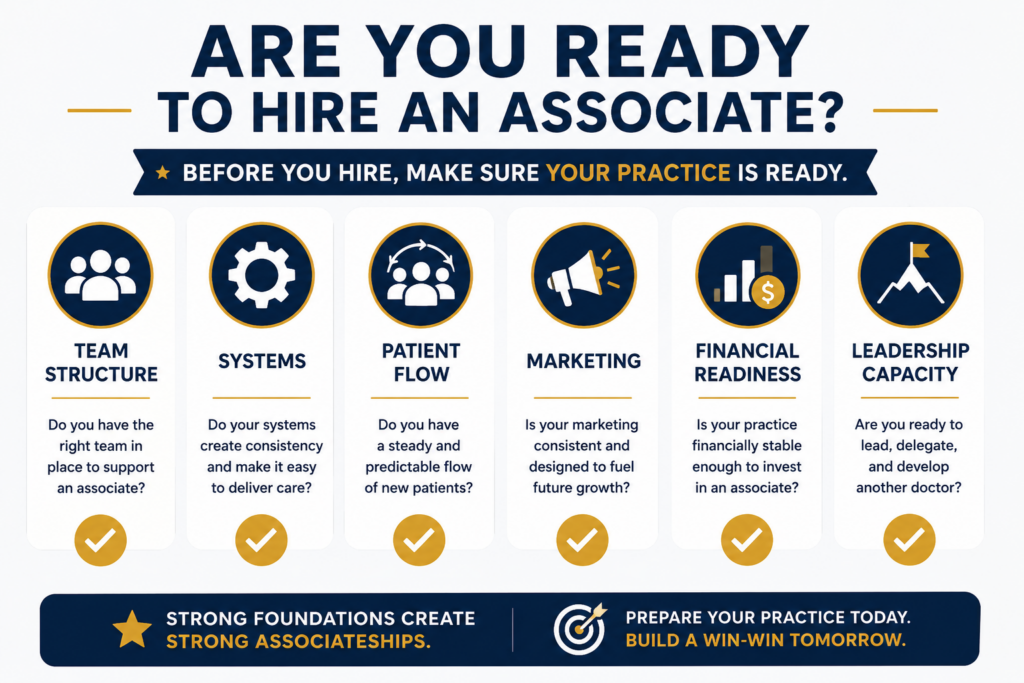
Before hiring an associate, strong clinics evaluate:
- team structure
- onboarding systems
- patient experience
- scheduling flow
- communication systems
- marketing consistency
- financial readiness
- leadership capacity
Because associates thrive in structured environments.
And struggle in chaotic ones.
The Clinic Must Be System-Driven First
One of the biggest mistakes chiropractors make is trying to scale a personality-driven clinic.
In personality-driven practices:
- everything depends on the owner
- communication changes constantly
- systems are undocumented
- expectations are unclear
- team members improvise daily
That creates instability.
Especially for associates.
A systems-driven clinic creates:
- clarity
- consistency
- predictable patient experiences
- stronger onboarding
- better retention
- scalable growth
That’s why successful associateships almost always emerge from clinics with strong systems already in place.
Many of these growth and leadership principles are explored more deeply in The Chiropractor’s Guide.
The Truth About Associate Retention
Most chiropractors focus heavily on:
- hiring associates
- recruiting associates
- compensating associates
But they spend far less time thinking about:
retaining associates.
That’s a mistake.
Because many associates leave clinics not because they dislike chiropractic…
…but because:
- expectations were unclear
- leadership was inconsistent
- communication broke down
- the systems were weak
- the vision wasn’t shared
The best associateships create:
- opportunity
- mentorship
- growth
- structure
- leadership development
- alignment
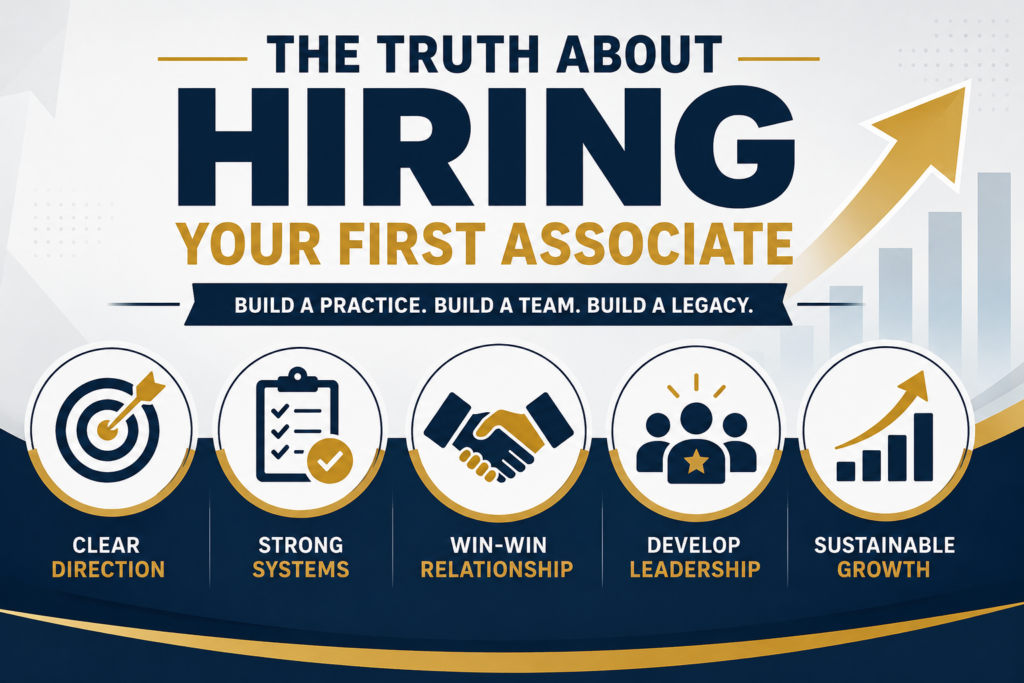
That’s why the most successful clinics build Win-Win relationships—not transactional ones.
What the Win-Win Associate Model Really Means
The best associateships are mutually beneficial.
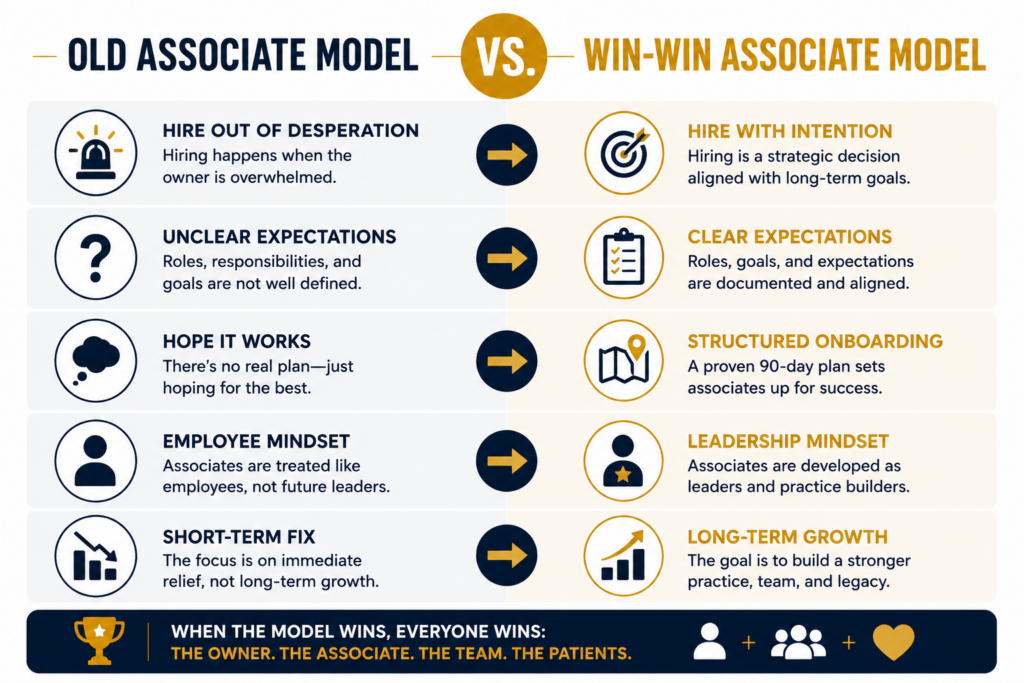
The clinic owner wins because:
- the practice becomes more scalable
- patient capacity increases
- leadership grows
- revenue becomes less owner-dependent
The associate wins because:
- expectations are clear
- systems already exist
- growth pathways are defined
- mentorship is available
- success becomes more achievable
Patients win because:
- communication becomes more consistent
- access improves
- care becomes more scalable
- the clinic operates more smoothly
That’s one reason we emphasize the Win-Win Associate Model when building scalable chiropractic practices.
Why Leadership Matters More Than Most Chiropractors Realize
Associates don’t just need clinical guidance.
They need leadership.
That includes:
- communication
- accountability
- mentorship
- structure
- clarity
- feedback
- consistency
Without leadership, associates are often left trying to “figure it out” themselves.
That creates:
- stress
- uncertainty
- inconsistent patient experiences
- lower production
- weaker retention
The strongest clinics develop leaders—not just employees.
And leadership development does not happen accidentally.
It requires intentional systems.
Patients Feel the Difference Immediately
Patients can tell very quickly whether an associateship is:
- organized
- aligned
- structured
- intentional
Or chaotic.
When communication feels inconsistent between providers, patient confidence drops.
That uncertainty affects:
- retention
- referrals
- trust
- compliance
- overall patient experience
That’s why successful associate integration is not just a staffing issue.
It’s a patient experience issue too.
The First 90 Days Matter More Than Most People Think
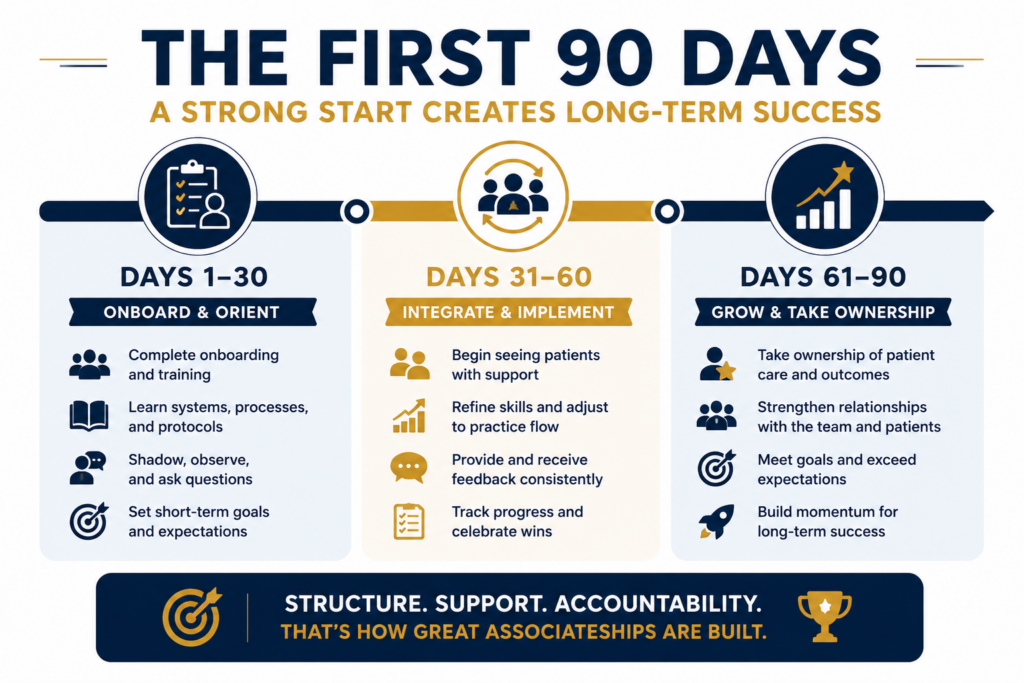
Many associateships fail early because there is no structured launch process.
The first 90 days should include:
- onboarding systems
- clear expectations
- communication standards
- team integration
- leadership meetings
- performance tracking
- patient education systems
Without structure, uncertainty grows quickly.
And uncertainty creates friction.
Many of the challenges chiropractors experience during the first 90 days stem from outdated assumptions about how associates should be hired, trained, and integrated into a practice. This episode of The Successful Chiro Podcast explores why the traditional associate model often fails—and what successful clinics are doing differently.
Strong starts matter.
The Hidden Cost of Hiring Too Early
Sometimes the best decision is not:
“Hire faster.”
Sometimes the best decision is:
“Prepare better.”
Because hiring before the clinic is ready can create:
- cash flow pressure
- operational chaos
- team stress
- patient inconsistency
- associate turnover
- owner burnout
And burnout is expensive.
The strongest practices scale intentionally.
Not emotionally.
Signs Your Clinic May Actually Be Ready
So what does readiness look like?
Generally, clinics are in a stronger position to hire when they have:
- documented systems
- stable patient flow
- consistent marketing
- healthy financial margins
- team alignment
- leadership structure
- communication standards
- predictable operations
That doesn’t mean the clinic must be perfect.
But it should be stable.
Because stable systems create better environments for growth.
What Successful Chiropractors Understand
The chiropractors who build thriving associate-driven clinics understand something important:
Hiring an associate is not simply a staffing decision.
It’s a leadership decision.
It changes:
- clinic structure
- communication
- operations
- culture
- patient experience
- growth trajectory
That’s why the best clinic owners focus just as heavily on:
- systems
- leadership
- communication
- accountability
…as they do on hiring itself.
Because sustainable growth always requires structure.
Final Thoughts
Hiring your first associate can absolutely transform a chiropractic practice.
But only when the clinic is prepared to support growth the right way.
Associateships thrive when:
- systems are clear
- leadership is intentional
- expectations are documented
- communication is consistent
- the vision is shared
Without those things, growth becomes unstable very quickly.
The truth is that successful associateships are rarely accidental.
They are built intentionally.
Ready to Build a Scalable Associate-Driven Practice?
At Five Star Management, we help chiropractors create:
- stronger systems
- better communication
- healthier associate relationships
- scalable operations
- long-term clinic growth
If you’re thinking about hiring your first associate—or trying to improve an existing associateship—we’d love to help.
👉 Schedule a complimentary strategy session with our team and learn how to build a true Win-Win associate model that benefits your clinic, your team, and your patients.
Or, if you’d like to learn these systems in a live setting, join us at an upcoming Five Star seminar where we teach scalable leadership and growth systems in greater depth.