
Every chiropractor has experienced it.
A new patient comes into the clinic. They seem excited. They have a great first visit. They tell you how much they need help.
And then?
They disappear.
No follow-up appointment. No continued care. No response.
Just gone.
Most chiropractors assume the problem is:
- price
- insurance
- patient commitment
- competition
- attention spans
But in reality?
Most patients don’t stop caring because they “don’t value chiropractic.”
They stop because the clinic failed to create enough certainty, connection, and clarity.
And the frustrating part is that most of these problems are completely fixable.
Let’s break down why patients don’t come back, and what successful clinics do differently.
The Biggest Myth About Patient Retention
Many chiropractors believe patient retention is mostly determined by:
- adjusting skill
- personality
- clinical outcomes
And while those things absolutely matter…
They are not the primary reason patients continue care.
Because patients don’t make decisions based only on logic.
They make decisions emotionally.
Patients continue care when they:
- trust the process
- understand the value
- feel understood
- believe the plan makes sense
- experience consistency
Without those things, uncertainty starts to creep in.
And uncertainty is expensive.
Most Patients Leave Long Before They Actually Stop Showing Up

This is important.
Patients don’t usually wake up one morning and suddenly decide:
“I’m never going back.”
Instead, disengagement happens gradually.
It starts with thoughts like:
- “I’m not sure this is working.”
- “Do I really need this many visits?”
- “I’m feeling a little better already.”
- “I don’t fully understand the plan.”
- “Maybe I’ll just skip this week.”
That small uncertainty compounds over time.
Eventually, missed visits become cancelled care plans.
And cancelled care plans become lost patients.
The clinics with the best retention systems understand something critical:
Patient retention is not a single conversation. It’s an ongoing process of building certainty.
Why Most Retention Problems Are Actually Communication Problems
Here’s a hard truth:
Most patients don’t leave because chiropractic failed.
They leave because communication failed.

Many clinics assume patients understand:
- why care matters
- how long healing takes
- why consistency matters
- what the long-term vision is
But patients often don’t fully understand any of those things.
And when communication becomes inconsistent, patient confidence drops.
That’s why successful clinics don’t “wing” patient education.
They systemize it. Many retention problems are actually systems problems, and this free chiropractic practice assessment is designed to help chiropractors identify those gaps quickly.
The Most Expensive Minute in Your Practice
One of the most expensive moments in any chiropractic clinic is this:
The minute a patient leaves uncertain about their care plan.
Because uncertainty creates hesitation.
And hesitation leads to:
- missed visits
- lower compliance
- shorter care plans
- weaker referrals
- lower lifetime value
The best clinics eliminate confusion before patients ever leave the office.
They don’t assume understanding.
They verify it.
Patients Need More Than Great Adjustments
Many chiropractors focus heavily on clinical excellence.
That’s important.
But patients also need:
- emotional certainty
- clarity
- structure
- consistency
- confidence in the process
A patient may love you personally and still stop care.
Why?
Because liking the doctor is not the same thing as understanding the value of continued care.
That’s where systems become essential.
Many of these communication and retention principles are explored more deeply in The Chiropractor’s Guide.
The Clinics With the Best Retention Have Systems
Patient retention is rarely accidental.
The strongest clinics create intentional systems around:
- patient education
- communication
- scheduling
- follow-up
- progress tracking
- team consistency
Without systems, retention becomes personality-dependent.
And personality-driven practices eventually hit a ceiling.
That’s why we teach chiropractors to build clinics that create consistency, not just motivation.

5 Reasons Patients Don’t Come Back
1. They Don’t Understand the Long-Term Vision
This is probably the biggest issue.
Many patients think:
“I feel a little better, so I must be done.”
But if patients only understand symptom relief, they’ll stop care the moment symptoms improve.
That’s why education matters.
Patients need to understand:
- phases of care
- healing timelines
- long-term benefits
- prevention
- consistency
The best clinics explain the “why” behind care repeatedly, not just once.
2. The Clinic Experience Feels Inconsistent
Patients notice inconsistency immediately.
Things like:
- rushed communication
- disorganized scheduling
- unclear procedures
- team confusion
- inconsistent messaging
…quietly reduce confidence.
Even if the adjustment itself is excellent.
Patients associate consistency with professionalism.
And professionalism builds trust.
That’s why systems-driven clinics retain patients better.
3. Nobody Reinforces Progress
Many patients are improving more than they realize.
But nobody points it out.
Patients need reinforcement.
They need reminders like:
- “You’re sleeping better.”
- “Your posture is improving.”
- “Your headaches are less frequent.”
- “You’re progressing exactly as expected.”
Without reinforcement, patients often underestimate progress.
And when people don’t recognize progress, motivation fades.
4. The Team Isn’t Aligned
Retention is not just the doctor’s responsibility.
It’s the entire team’s responsibility.
Every interaction matters:
- front desk conversations
- scheduling tone
- financial discussions
- follow-up communication
- re-exam procedures
If the team lacks alignment, patients feel it.
Strong retention requires a consistent patient experience from everyone involved.
Retention becomes much easier when clinics build aligned, systems-driven teams. That’s one reason we emphasize the Win-Win Associate Model when building scalable chiropractic practices.
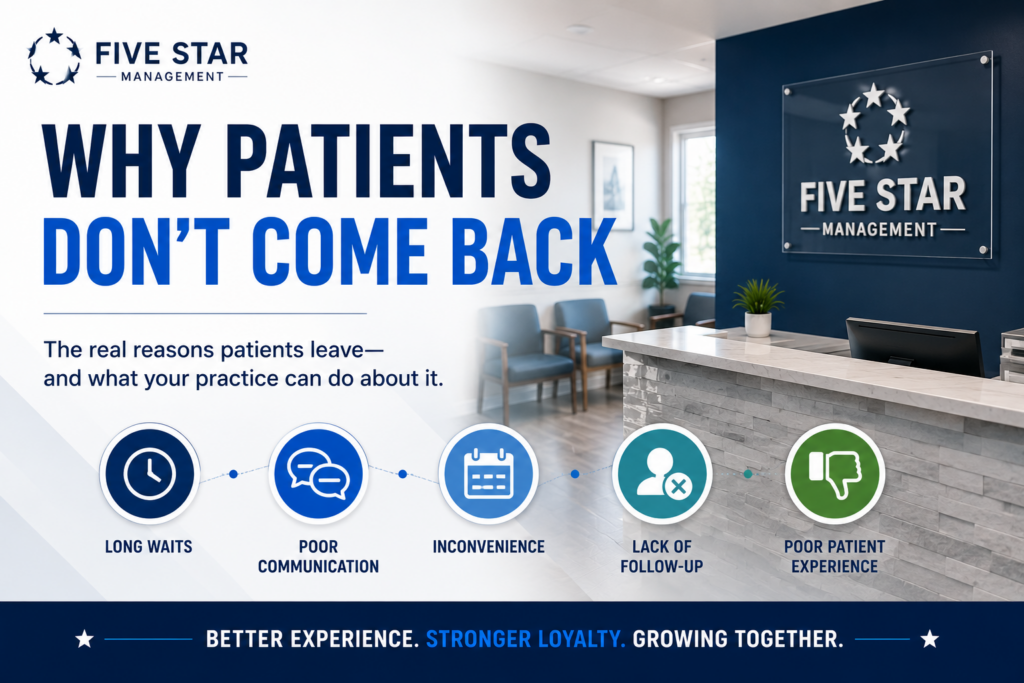
5. There’s No Follow-Up System
Many clinics lose patients simply because nobody follows up.
That’s a massive missed opportunity.
Patients miss appointments for all kinds of reasons:
- life gets busy
- finances shift
- schedules change
- motivation drops
But many patients are still open to continuing care.
They just need re-engagement.
That’s why reactivation systems are so valuable.
Successful clinics don’t wait passively.
They proactively reconnect with patients.
Retention Starts on Day One
One of the biggest mistakes chiropractors make is waiting until patients begin dropping off before addressing retention.
But retention actually begins during:
- the first phone call
- the first office visit
- the first explanation of care
- the first scheduling interaction
Patients form impressions immediately.
This episode of The Successful Chiro Podcast explores how successful chiropractors reduce patient drop-off during the first six visits and improve long-term retention.
The strongest clinics create confidence from the very beginning.
That includes:
- clear expectations
- organized systems
- strong communication
- consistent messaging
- intentional patient education
Retention is built proactively—not reactively.
Why Systems Create Better Patient Experiences
Patients don’t want to feel like they’re moving through chaos.
They want clarity.
They want confidence.
They want to feel like the clinic has a plan.
That’s exactly what systems provide.
A systems-driven clinic creates:
- smoother visits
- stronger communication
- more confidence
- better patient experiences
- stronger long-term relationships
And when patients trust the process, retention improves naturally.
The Emotional Side of Retention
This is something many chiropractors overlook.
Patients are not just buying care.
They’re buying:
- certainty
- trust
- hope
- confidence
- reassurance
If patients feel emotionally disconnected from the process, they are far more likely to stop care early.
That’s why great retention requires more than technical skill.
It requires intentional communication and relationship-building.
What High-Retention Clinics Do Differently
The clinics with the strongest retention systems consistently:
Educate Repeatedly
They reinforce the value of care continuously.
Communicate Clearly
Patients always understand what’s happening next.
Track Progress
Wins are identified and celebrated.
Create Team Alignment
Everyone communicates consistently.
Build Predictable Systems
The patient experience feels organized and intentional.
That consistency creates confidence.
And confidence creates retention.
The Hidden Cost of Poor Retention
Most chiropractors focus heavily on attracting new patients.
But poor retention quietly damages:
- profitability
- referrals
- team morale
- scheduling stability
- long-term growth
If patients constantly leave early, clinics are forced into an endless cycle of replacing them.
That creates stress.
And eventually, burnout.
Strong retention changes everything.
Because when patients stay longer:
- outcomes improve
- referrals increase
- revenue stabilizes
- growth becomes more predictable
Retention is one of the highest ROI areas in any chiropractic practice.
The Future of Chiropractic Growth
The clinics that grow sustainably over the next decade will not simply be the clinics with the best marketing.
They’ll be the clinics with:
- stronger communication
- better systems
- more consistent patient experiences
- healthier team alignment
- higher retention
Because keeping patients is just as important as attracting them.
And in many cases?
It’s even more important.
Final Thoughts
If patients aren’t coming back, it doesn’t automatically mean:
- your care is bad
- your fees are too high
- your market is too competitive
More often, it means there are breakdowns in:
- communication
- certainty
- systems
- consistency
- patient education
The good news?
Those problems are fixable.
And once retention improves, every other part of the clinic becomes stronger too.
Ready to Improve Patient Retention?
At Five Star Management, we help chiropractors build systems that improve:
- patient retention
- communication
- team alignment
- clinic consistency
- long-term growth
If you want to create a clinic where patients stay longer, refer more often, and experience greater confidence in their care, we’d love to help.
👉 Schedule a complimentary strategy session with our team and learn how to build stronger systems for long-term patient growth and retention.
Or, if you’d like to learn these systems in a live setting, join us at an upcoming Five Star seminar where we teach the communication, leadership, and retention strategies that help practices scale sustainably.